


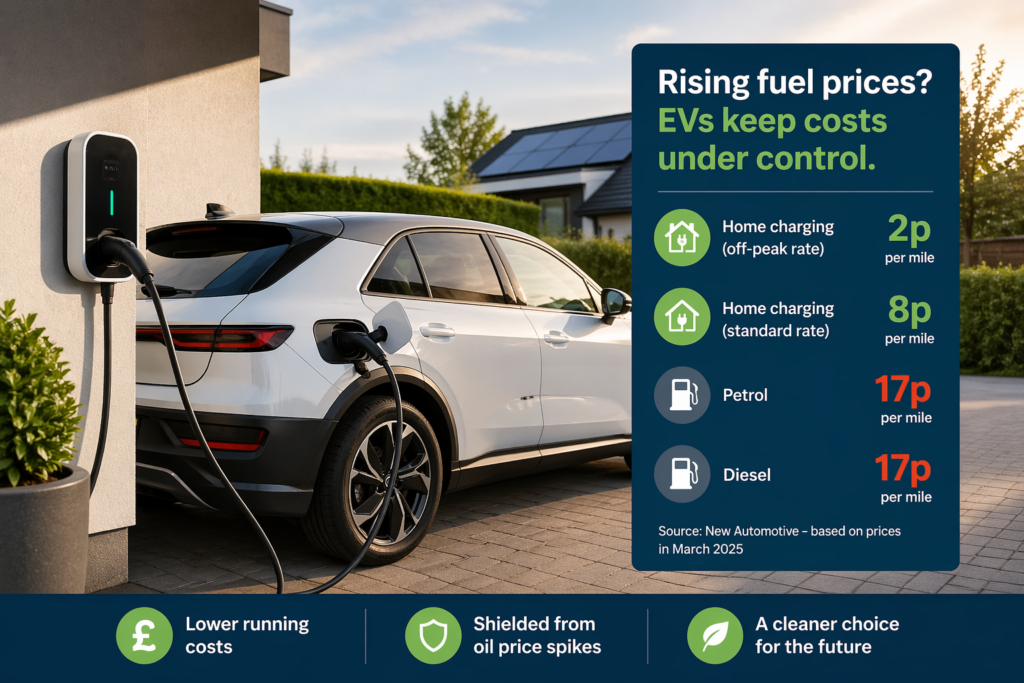

Rising fuel prices have pushed electric cars back into the spotlight. For drivers watching petrol and diesel costs climb, the question is fairly obvious: are electric cars cheaper to run, or do the savings mount up elsewhere?
The answer is not quite black and white. It depends on how you use your car, where you charge it and the wider costs involved. But recent figures suggest the gap between electric and petrol running costs has widened again.
Petrol prices have jumped sharply in recent weeks, with increases of around 20p per litre in a short space of time. Diesel has seen even steeper rises. For many motorists, that has turned everyday driving into a noticeably more expensive habit.
Electric vehicle drivers are not completely insulated from wider energy price changes, but they are less exposed to global oil market shocks. In practical terms, that means more predictable day-to-day running costs. The following information should assist motor traders involved in car sales to answer potential questions from customers who have a difficult buying decision to make.
EV running costs depend heavily on where you charge
The biggest advantage tends to sit with drivers who can charge at home, particularly overnight.
Current estimates put petrol and diesel at roughly 17p per mile. By comparison, charging an electric car at home on a standard tariff comes in at around 8p per mile. With a smart meter and off-peak rates, that can drop to as little as 2p per mile.
That is a noticeable difference, especially over a full month of driving. It also explains why petrol prices and electric cars are being discussed together again. When fuel prices rise quickly, EV running costs can look far more stable.
However, home charging is only part of the story. Public charging is usually more expensive. Typical public chargers sit at around 54p/kWh, while rapid chargers can reach 76p/kWh. That compares with roughly 25p/kWh for a standard domestic rate and around 7p/kWh on some overnight tariffs.
So, home charging vs public charging is not a minor detail. It can significantly change the overall cost of owning an electric car.
Electric car insurance can cost more
Running costs are only one side of the equation. Electric car insurance is another important factor to consider before making the switch.
Estimates suggest electric vehicles can be between 15 and 25 per cent more expensive to insure than petrol equivalents. This is often linked to higher repair costs, specialist parts and the overall value of the vehicle.
That said, insurance pricing is always individual. It depends on factors such as the car itself, where it is kept, annual mileage, driver history and claims record. Some drivers may find the difference smaller than expected, while others may see a more noticeable increase.
It is worth getting a quote before committing to a purchase. It keeps expectations grounded and avoids surprises later on.
If your business services, repairs or modifies vehicles then Plan Insurance Brokers can source a tailored Motor Trade insurance policy for you. If you have any more questions or would like a quote call our expert team, request a call back or fill in our new quick quote form.
The upfront cost question is shifting
Electric cars have traditionally been more expensive to buy, but that gap is narrowing.
Recent pricing data suggests the average new electric car is now slightly cheaper than a new petrol equivalent once manufacturer discounts are factored in. In the used market, electric cars still tend to cost more, with newer EVs holding their value relatively well in general.
That matters because the used market is where many drivers begin their search. Lower running costs can help balance a higher purchase price, but the full cost still needs to be considered.
There is also the cost of installing a home charger, typically between £800 and £1,200. While not essential for every driver, it often plays a key role in unlocking the lowest running costs.
Should UK drivers switch to an electric car?
Switching to an electric car in the UK may make sense if you can charge at home, drive predictable routes and are comfortable with the upfront costs.
It may be less straightforward if you rely entirely on public charging or need the lowest possible purchase price.
Rising fuel costs have made electric vehicles more appealing again, but the decision still comes down to individual circumstances. Charging access, insurance costs, mileage and budget all play a part.
Electric cars can reduce exposure to petrol and diesel price swings. They do not remove every cost of motoring. A clear comparison across all factors is still the best place to start.