



The automotive sector is entering one of the most disruptive periods in its history, with established manufacturers facing growing pressure from a wave of Chinese electric vehicle (EV) brands, changing consumer expectations and rapid technological development.
That warning comes from industry veteran Jon Wakefield, UK boss of Aion, the electric vehicle marque owned by Chinese automotive giant GAC Group. Speaking at the launch of Aion’s new UT electric supermini, Wakefield described today’s market as increasingly “Darwinian”, with only the most adaptable businesses likely to thrive.
Aion and the New Generation of Chinese Manufacturers
Aion is one of several ambitious Chinese brands seeking to establish a foothold in the UK and European markets. Backed by GAC Group, one of China’s largest vehicle manufacturers, the brand is pursuing measured expansion rather than chasing volume at any cost.
However, Aion forms part of a much broader trend. Chinese manufacturers have moved from fringe players to serious competitors within a remarkably short period of time. Their ability to develop vehicles quickly, launch new models at pace and offer compelling value propositions has begun reshaping global automotive markets.
If your business services, repairs or modifies vehicles then Plan Insurance Brokers can source a tailored Motor Trade insurance policy for you. If you have any more questions or would like a quote call our expert team, request a call back or fill in our new quick quote form.
The Chinese Brands Taking Market Share
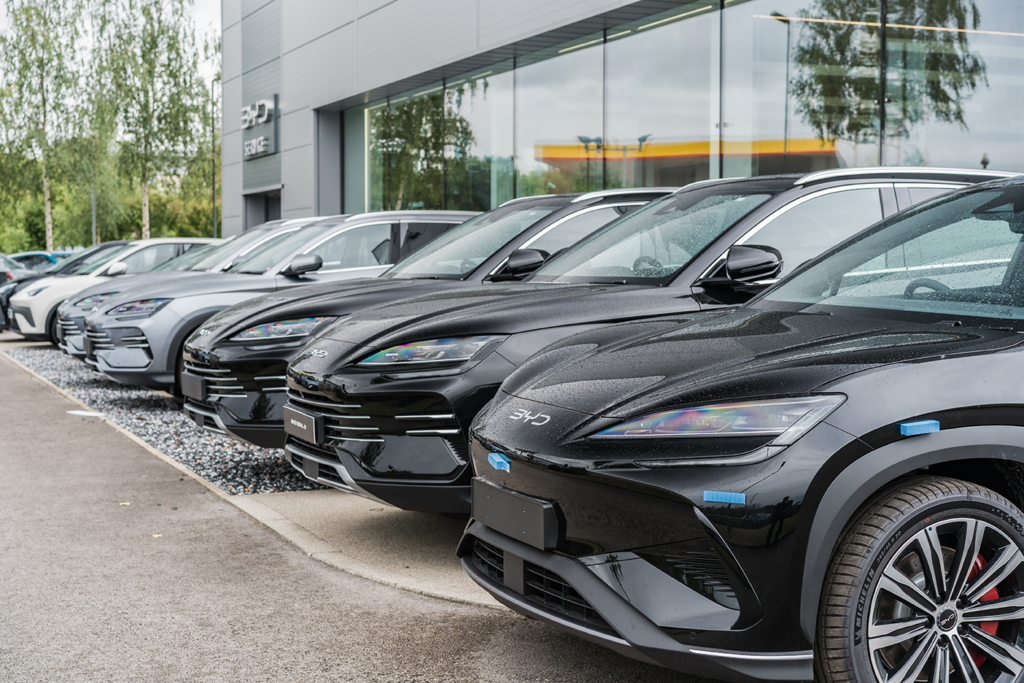
The rise of Chinese automotive brands is no longer theoretical. Manufacturers such as BYD, MG, Omoda, Jaecoo, GWM Ora, Leapmotor and XPeng are all growing their presence across Europe and the UK. BYD has emerged as one of the most significant challengers, while MG continues to build on its already substantial UK market position.
Collectively, Chinese-owned brands now account for a meaningful and growing share of UK new car registrations, with market penetration increasing year-on-year as buyers seek affordable electric vehicle alternatives. Much of this growth has been driven by competitive pricing, strong equipment levels and the ability to bring new products to market quickly.
For consumers, this increased competition has expanded choice. For incumbent manufacturers, it has intensified pressure on margins and market share.
Traditional Manufacturers Face Difficult Decisions
Wakefield’s comments come at a challenging time for many established car makers. The same week he spoke, Jaguar Land Rover (JLR) announced plans to cut 4,000 jobs as part of a major cost-saving programme. Volkswagen has also announced significant workforce reductions as manufacturers respond to softer demand, rising development costs and the transition towards electrification.
These developments highlight a wider industry reality. The challenge facing manufacturers is no longer simply the move from petrol and diesel vehicles to electric powertrains. It is also about competing against a new generation of highly efficient global rivals with different cost structures and development cycles.
Adaptability Will Be the Key to Survival
According to Wakefield, success will depend on how quickly organisations can respond to changing market conditions. Chinese manufacturers have developed a reputation for speed. Product updates, technology enhancements and model launches often happen far faster than the traditional automotive development cycles that have dominated Europe for decades.
Many established manufacturers have spent years operating alongside Chinese businesses through joint ventures and strategic partnerships. The challenge now is whether they can match the pace of innovation and agility that those competitors have demonstrated. As the market becomes increasingly competitive, scale alone may no longer guarantee success.
Dealers Are Already Adapting
The disruption is not limited to manufacturers. Across the UK, dealer groups are rapidly adapting to changing consumer demand. Many retailers who historically relied on established European, Japanese and Korean brands are increasingly embracing Chinese entrants as buyers gravitate towards value-focused EVs.
The franchised dealer sector has repeatedly demonstrated its resilience through economic downturns, regulatory change and technological evolution. Today’s challenge is another chapter in that story. The current pivot towards lower-cost electric vehicles reflects changing customer priorities around affordability and running costs. Dealers who can adapt their proposition are likely to benefit from the evolving landscape.
Autonomous Vehicles Could Be the Next Major Disruption
While much attention is focused on electric vehicles, another transformation looms on the horizon. Autonomous vehicle technology continues to advance, and although widespread adoption may still be some way off, it has the potential to reshape vehicle ownership, mobility services, insurance models and dealership operations.
Many businesses are currently adapting to the influx of affordable Chinese EVs. Before that transition is fully complete, the industry may find itself preparing for a second wave of disruption driven by automation, connectivity and new mobility models. For manufacturers, dealers and insurers alike, the ability to evolve quickly will become increasingly important.
The automotive industry is undergoing a fundamental shift. Chinese manufacturers are expanding rapidly, established brands are restructuring, and dealers are being forced to adapt to changing consumer demand.
As Jon Wakefield suggests, this may prove to be a period of “survival of the fittest”. The businesses that remain agile, embrace change and respond quickly to new market realities are likely to emerge strongest from the disruption.