


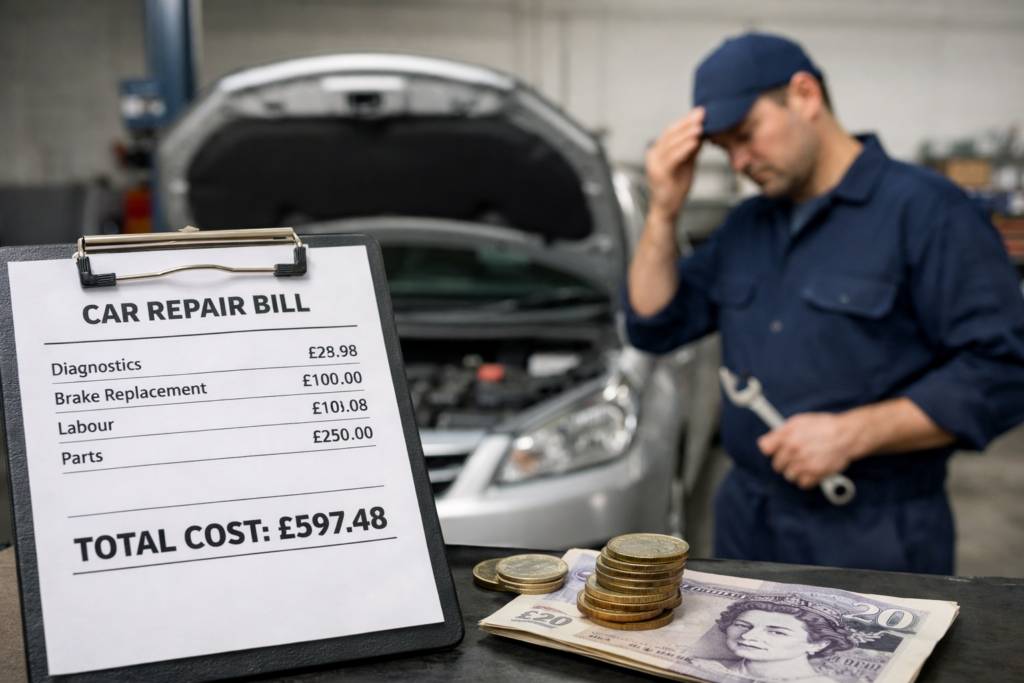

UK car repair costs are rising again, but the more telling part of the story is what motorists are doing in response. Bumper’s latest Automotive Aftersales Report says the average repair bill reached £597.48 in 2025, up 26% from £473.33 in 2021. More striking still, in 70% of vehicle health checks where red, safety-critical issues were identified, drivers did not authorise all of the urgent work recommended.
That shifts this from a simple “prices are going up” story into something more serious. When urgent work starts getting left behind at the workshop, affordability is no longer just a budgeting issue. It is affecting repair decisions in real time. Among motorists who turned down urgent red work, 46% said they could not afford it, while 33% said the repair itself was too expensive.
When essential work starts sliding down the list
Bumper found that 47% of drivers say household finances are affecting their ability to maintain their car. Among those affected motorists, 38% are delaying recommended repairs, 21% are skipping scheduled servicing and 47% are declining advisory amber items during vehicle health checks. That is quite a lot of “not now” for things that have a habit of becoming “definitely now” a few weeks later.
Jack Allman, chief commercial officer and co-founder at Bumper, said cost remains the critical decision factor for motorists and warned that affordability pressures are leaving urgent repairs unfinished. That feels consistent with what other parts of the sector are seeing too.
If your business services, repairs or modifies vehicles then Plan Insurance Brokers can source a tailored Motor Trade insurance policy for you. If you have any more questions or would like a quote call our expert team, request a call back or fill in our new quick quote form.
Why UK car repair costs matter beyond the garage invoice
The Motor Ombudsman said in January that nearly seven in ten UK garages expect drivers to skip vital repairs in 2026 in an effort to cut costs. Its warning was blunt: delaying work can turn a smaller, manageable bill into a much bigger one, while also raising safety concerns. It pointed to examples such as timing belts, brakes and tyres, where postponement can quickly become expensive as well as risky.
There is a wider market effect as well. The ABI said repair costs rose by £100 million quarter on quarter to £2.1 billion in Q2 2025, with complex vehicle technology, inflation in parts and materials, and technician shortages all feeding into claims pressure. So the workshop bill a driver sees is only one part of a bigger cost story running through the motor sector.
More drivers are shopping around
The report also suggests motorists are changing where they go for maintenance. Around 59% said they are moving towards independent workshops in search of lower costs, while 91% said they are keeping their vehicles for longer. That makes sense. If a car needs work more often and household budgets are tight, people will naturally compare options more closely.
And there is a price difference to notice. Which? says a service from a franchised dealer costs £361 on average across the cars in its survey, compared with £260 at a local independent. That does not mean independents are always the right answer for every job, but it does help explain why more motorists are drifting in that direction.
The real takeaway
The headline number is easy enough to remember: the average repair bill is now just shy of £600. But the bigger takeaway is behavioural. Drivers are keeping cars longer, delaying work, skipping servicing and becoming more price-sensitive about where repairs are carried out. For workshops, dealers and anyone watching the motor market closely, that is the part worth paying attention to. It tells you that affordability pressure is not sitting in the background. It is shaping decisions at the point of repair.