


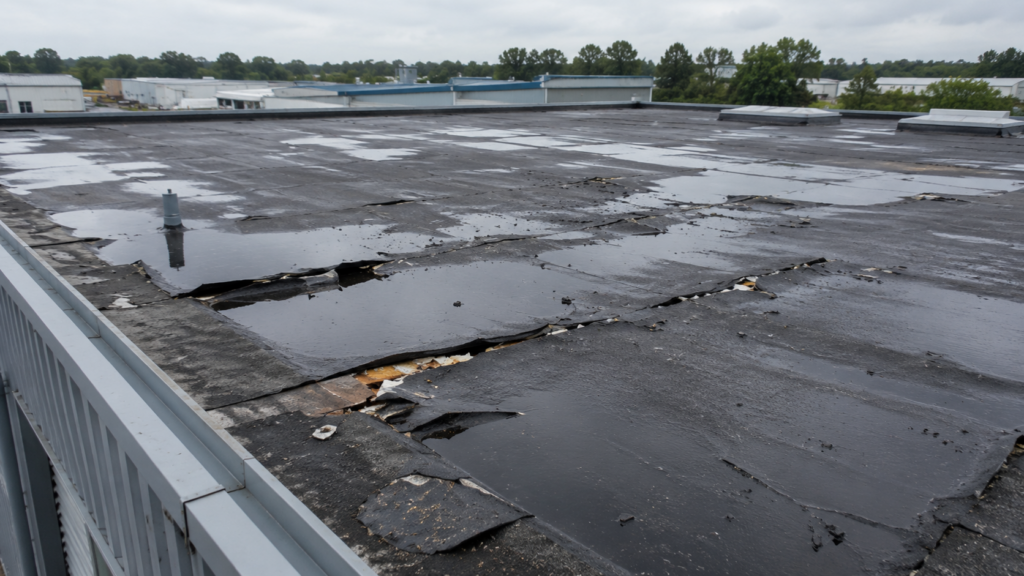

Flat roof warranty conditions are one of those insurance details that many property owners only discover when something has already gone wrong. By then, it can be a very awkward conversation.
The issue is not usually whether a flat roof can be insured. It often can. The bigger question is whether the property owner has met the responsibilities set out in the policy.
That is where flat roof clauses matter.
Why flat roof warranties matter
A flat roof warranty, or flat roof clause, is usually an insurer’s way of saying: “We will consider sudden insured damage, but the roof must be properly maintained.”
In plain English, the policy may expect you to keep the roof in good condition, inspect it regularly, deal with defects quickly and avoid obvious problems such as blocked gutters or standing water.
This is not just admin for the sake of admin. Flat roofs are more exposed to pooling water, ageing materials and drainage issues than many pitched roofs. If a leak appears after heavy rain or a storm, the insurer may need to understand whether the damage was sudden, or whether it was linked to gradual deterioration.
That line matters.
Insurance is generally designed for sudden and unforeseen events. It is not there to replace normal maintenance. So, if there are no inspection records, repair invoices or photos, it can become harder to evidence that the roof was in reasonable condition before the incident.
The problem with “we checked it ourselves”
Lots of landlords and property owners do keep an eye on their buildings. The trouble is that a quick look from the ground does not always create useful evidence.
In our experience, many new clients who are property owners have often never heard of a flat roof warranty. That is, until we highlight the details for them. That is understandable. Policy documents are not exactly light bedtime reading. However, as a policyholder, understanding the responsibilities that they stipulate on you can be crucial.
When a claim happens, the insurer may ask for evidence such as:
- Dates of roof inspections
- Photos showing the condition of the roof
- Contractor reports
- Invoices for repairs or maintenance
- Records of gutter clearing
- Notes showing when defects were identified and fixed
Without that, a claim conversation can quickly move away from the damage itself and towards what can be proven.
Plan Insurance Brokers can accommodate your Property Owners & Landlord Insurance needs. Just fill in our short call back form, and our professional brokers will be in contact to arrange your insurance.
Flat roof insurance claims and maintenance evidence
Most flat roof insurance issues become difficult because of the evidence gap.
A property owner may say the roof was maintained. The insurer may ask how that can be shown. If there is no inspection log, no contractor note and no repair history, both sides can end up arguing over whether the problem was storm damage, water ingress, poor maintenance or wear and tear.
That does not mean a flat roof clause stops claims. It means it conditions the right to claim.
This is an important distinction. A well-maintained flat roof can still suffer sudden damage. The difference is that maintenance records help show where responsibility sits.
For landlords, this matters even more. Rental properties may have periods where the owner is not visiting regularly. Tenants may report issues late. Gutters can block quietly. Small defects can become bigger problems before anyone notices. It is not glamorous, but a basic inspection routine can prevent a lot of hassle.
A simple flat roof maintenance routine
Flat roof maintenance does not need to be complicated.
Start by checking the policy wording. Look for any flat roof warranty, condition precedent or maintenance clause. Some policies may set specific inspection intervals, such as every 6 or 12 months. Others may refer more generally to keeping the roof in good repair.
Then build a simple record system.
For each inspection, note the date, who inspected it, what was checked and whether any action was needed. Take photos. Keep contractor invoices. If a defect is found, record when it was repaired. If gutters are cleared, keep a note of that too.
For larger buildings, commercial premises or blocks, using a suitable contractor periodically can provide stronger evidence than a quick internal note.
The key is consistency. A file of simple records is far better than trying to piece everything together after water is already coming through the ceiling.
What property owners should do next
If you own a property with a flat roof, now is a sensible time to check your insurance documents and maintenance arrangements.
Look for the flat roof warranty. Check whether inspections are required. Make sure the roof is being maintained and that evidence is being kept.
Flat roof warranties are not there to catch people out. They are part of how insurers manage a known property risk. But they only work properly when they are understood and followed.
And frankly, “I think Dave looked at it last winter” is not the strongest claims file in the world.